Ireland is one of Europe’s most attractive destinations for international students, offering a high-quality education system, an English-speaking environment, and strong connections to some of the world’s leading industries.
As the only English-speaking country in the Eurozone, Ireland provides international students with globally recognised qualifications while offering access to the wider European market. The country is also home to major multinational companies in technology, finance, pharmaceuticals, and engineering, making it an excellent choice for students aiming to build international careers.
Beyond academics, Ireland is known for its safe, welcoming communities, vibrant student life, and rich cultural heritage, making it easy for international students to settle in and feel at home.

Tuition costs vary considerably depending on the institution and the study programme you are interested in. Tuition costs do not remain static, so it is important to double-check fees with the university/college you are considering applying to. The cost of education in Ireland is relatively low compared to other destinations. With moderate tuition fees, a variety of scholarships, manageable living costs and the ability to work part-time during the academic term, students can manage their finances without compromising the quality of education.
Undergraduate Tuition Fees 2025/26
• Business €10,300 – €29,000
• Engineering €14,500 – €28,500
• Science & Technology €14,500 – €28,500
• Arts and Humanities €13,500 – €28,200
• Medicine & Health Sciences €50,135 – €62,500
Tuition costs vary considerably depending on the institution and the study programme. Tuition costs do not remain static, so it is important to double-check fees with the universities or colleges you are considering applying to.
Tuition fees for 2025/2026 for Postgraduate, Non-E.U. students at a higher education institution are as follows:
• Business • €14,000 – €40,000
• Engineering • €15,000 – €30,000
• Science & Technology • €15,000 – €31,000
• Arts and Humanities • €12,000 – €23,000
• Medicine & Health Sciences • €11,000 – €30,000
Overall Rank University
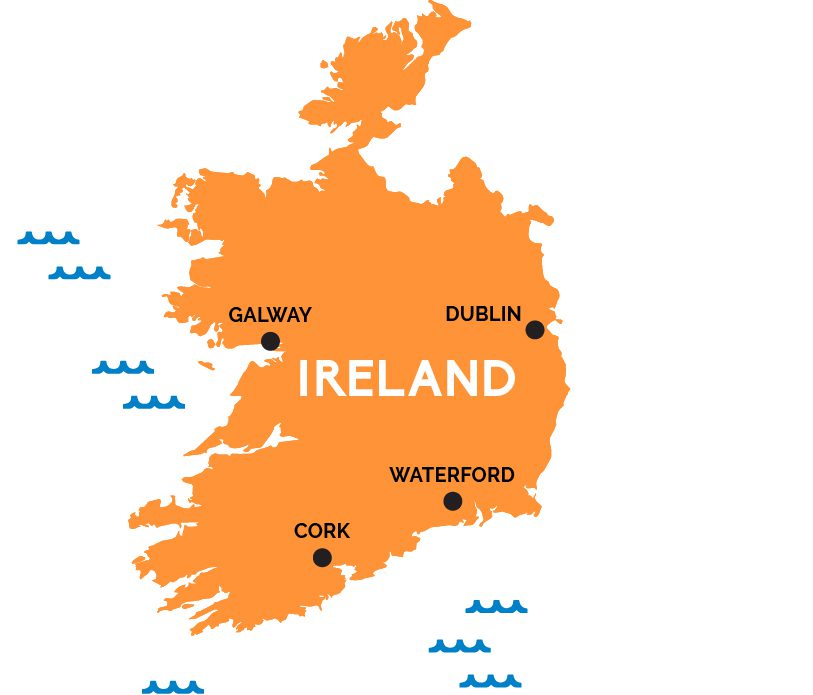
118: University College Dublin,Dublin, Ireland
246: University College Cork, Cork, Ireland
284: University of Galway, Galway, Ireland
401: University of Limerick, Limerick, Ireland
410: Dublin City University, Dublin, Ireland
771-780: Maynooth University, Maynooth, Ireland
781-790: Technological University Dublin, Dublin, Ireland
Although Ireland is a first-world country, it offers affordable living and study options. Tuition fees for most undergraduate and postgraduate programs typically range from €12,000 to €24,000 per year. With scholarships for international students, these costs can sometimes drop to below €10,000.
Living expenses vary depending on the city. Dublin, the capital, is the most expensive in terms of accommodation and daily costs, while other cities are generally more affordable. On average, students can expect to spend €10,000 to €15,000 per year on housing, food, transportation, and other essentials.
University students have access to a diverse range of accommodation options. The most common choices are:
On-campus housing.
It is offered by many institutions. While this option provides convenience and proximity to academic facilities, it is often in high demand, relatively costly, and can be challenging to secure.
Most universities provide halls of residence, typically comprising shared apartments accommodating between four and eight students. Each student is allocated a private bedroom, while kitchen, living, and bathroom facilities are shared. Payment for on-campus accommodation is generally required in two instalments, due in September and February. Monthly payment plans are not typically available. A security deposit equivalent to one month’s rent is usually required in advance and is refundable upon departure, provided the accommodation is left in good condition. Utility charges, such as heating and electricity, are often billed separately; however, some residences include these costs in the initial fee and deduct any excess usage from the deposit upon departure.
Self-catering
Students seeking greater independence may opt for self-catering, privately rented accommodation. In such arrangements, rent is paid monthly and in advance, and a deposit equivalent to one month’s rent is required at the commencement of the lease. This deposit is refundable, subject to the condition of the property at the end of the tenancy. Lease agreements typically span 9 to 12 months, and failure to adhere to the terms—such as vacating without notice—may result in forfeiture of the deposit. A minimum notice period of one month is generally required before vacating the premises.
Reside with a host family
Another alternative is to reside with a host family, which offers a blend of independence and the comforts of a family environment. This option can be particularly beneficial for international students, providing a supportive setting and easing the transition to life in a new country.
If you wish to come to Ireland to study for more than 3 months, you need to apply for a long term study visa.
You should apply for a long term study visa up to 3 months before your date of travel to Ireland.
If you wish to come to Ireland to study for more than 3 months, you need to apply for a long term study visa.
You should apply for a long term study visa up to 3 months before your date of travel to Ireland.
Most Irish institutions require proof of English proficiency such as IELTS, TOEFL, PTE, or Duolingo. Some universities may waive this requirement if you studied in an English-medium institution or completed previous education in English.
Yes. International students are allowed to work:
Up to 20 hours per week during academic terms
Full-time (40 hours) during official holidays
Processing times can vary between countries and different application types. They can also vary during high volume periods during the year.
However, applicants can expect a decision within approximately 8 weeks from the date their application was received at the visa office, embassy or consulate.
Yes. Ireland offers a post-study work visa of up to 2 years, depending on the qualification level, allowing graduates to gain valuable international work experience.
In some cases, postgraduate and PhD students may be eligible to bring dependents. This depends on the programme, duration of study, and visa conditions.
Yes. We offer complete support, including:
University and course selection
Application processing
Scholarship guidance
Visa support
Accommodation advice
Pre-departure assistance
We strive to provide exceptional customer service and support. Whether you have questions.

Discover Your Future!